Skip linksSkip to Content
play
Live
Navigation menu
  • News
    • Africa
    • Asia
    • US & Canada
    • Latin America
    • Europe
    • Asia Pacific
  • Middle East
  • Explained
  • Opinion
  • Sport
  • Video
    • Features
    • Economy
    • Human Rights
    • Climate Crisis
    • Investigations
    • Interactives
    • In Pictures
    • Science & Technology
    • Podcasts
    • Travel
play
Live

In Pictures

Gallery|Poverty and Development

Stories of survival: Widows of India’s farmer suicides

Widows and children left to pay off debts and make ends meet amid societal stigma after the death of their husbands.

Save

Share

facebooktwitterwhatsappcopylink
Indian Farmer widows / Please Do Not Use
Savita's husband, Jitender, hanged himself from the roof of their home. She is one of the hundreds of widows who is now left to fend for herself. She is now raising her three daughters - Yogini 12, Roshni 10 and Tanu 6 - on her own. She must also repay the debt her husband incurred from private moneylenders and banks. [Deepti Asthana/Al Jazeera]
By Deepti Asthana
Published On 3 Nov 20163 Nov 2016

Vidarbha, India – Once Vidarbha was known for its cotton or “white gold” production, but now the region is mostly known as the suicide belt of India.

According to Vidarbha Jan Andolan Samiti (VJAS), a non-governmental organisation that has been documenting the suicide of farmers for the past 15 years, approximately 6,000 farmers have killed themselves since 2012 in six districts of Vidarbha region – Amravati, Yavatmal, Wardha, Washim, Akola and Buldhana.

The situation is the same in the nearby region of Marathwada. Even a debt of 10,000 rupees ($150) is enough to push a farmer over the edge. Young farmers aged between 18 and 30 accounted for the second-highest number of suicides, leaving widows and children to cope with the consequences. 

The poor and marginal farmers fall into the clutches of moneylenders, who charge exorbitant rates of interest, which the farmers are unable to repay, thus pushing them into perpetual debt that leads to the spate of suicides, said Rahul Bais, who heads Swarajya Mitra, a VJAS partner organisation.

In villages around Vidarbha, tales abound of the suffering endured by widows of farmers who have killed themselves because of the agrarian crisis. Widows and children who are left behind face a difficult life.

The widows are pushed into more debt and take jobs as labourers on other farms to sustain themselves. The children often drop out of school as their mother can’t afford to pay fees, and they work to help the family instead.

India’s shocking farmer suicide epidemic

Advertisement
Indian Farmer widows / Please Do Not Use
The only treasure Savita possesses are her children, who provide her with the strength to keep going. [Deepti Asthana/Al Jazeera]
Advertisement
Indian Farmer widows / Please Do Not Use
Tanu is full of energy. Her laughter is the food for the poor family, especially for her mother who lives for her children. [Deepti Asthana/Al Jazeera]
Indian Farmer widows / Please Do Not Use
The only man in the family is Savita's 93-year-old father, who came to live with them after Jitender's suicide. Savita, although independent, still longs for a man for her family to avoid harassment and the stigma a widow faces in her society. [Deepti Asthana/Al Jazeera]
Indian Farmer widows / Please Do Not Use
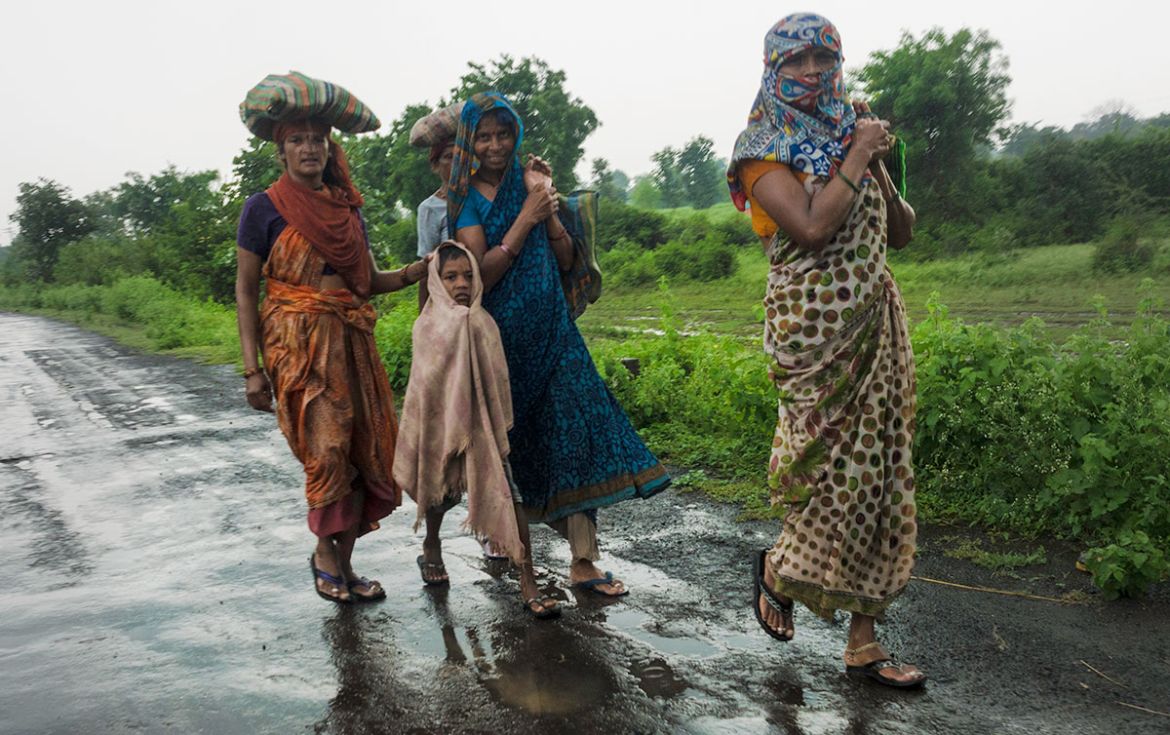
Women walk up to 3km to fetch water for the daily needs of their family. Using toilets or taking a bath is a luxury. There is no water at school for the children who return home for water and go to fields for the toilet. [Deepti Asthana/Al Jazeera]
Indian Farmer widows / Please Do Not Use
With perpetual economic struggles, those who have the courage and can afford to, migrate to big cities such as Mumbai, Pune and Nagpur. [Deepti Asthana/Al Jazeera]
Indian Farmer widows / Please Do Not Use
'We haven't eaten any vegetable for the past two months. We only eat lentils that we produce in our fields,' says Sangeeta, the widow of Ashok Saatpaise, 45. [Deepti Asthana/Al Jazeera]
Advertisement
Indian Farmer widows / Please Do Not Use
Savita, widow of Praveen Chaudhari, 30, was only 15 when she married and now has two children. Praveen died only seven months ago, the most recent farming suicide in the district. She is now looking for a way to start a small business to take care of her children. [Deepti Asthana/Al Jazeera]
Indian Farmer widows / Please Do Not Use
Vaishnavi Thakre, 13, was only five when her father killed himself. She now stays in a hostel as her mother can't afford to pay for her travel to senior school in Chandur. She misses being at home. [Deepti Asthana/Al Jazeera]
Indian Farmer widows / Please Do Not Use
Savita wears her husband's shirt to protect her from heat and husk. With the death of the family's bread-winner, Savita has been forced to take all sorts of jobs, from working on other people's farms to ironing clothes of neighbours. [Deepti Asthana/Al Jazeera]
Indian Farmer widows / Please Do Not Use
Savita and other women farmers take a lunch break from their work as labourers in soybean fields in Vidarbha. [Deepti Asthana/Al Jazeera]
Indian Farmer widows / Please Do Not Use
Most of the women find work as labourers for a daily wage of around $2. The work is available two or three days a week, depending on the requirements of the landowner. [Deepti Asthana/Al Jazeera]
Indian Farmer widows / Please Do Not Use
Roshni, Savita's third daughter cooks on the wood fire for a family celebration. The smoke is harmful for children, but Savita can't afford to get a gas cylinder, and instead picks up wood while returning from work. [Deepti Asthana/Al Jazeera]
Indian Farmer widows / Please Do Not Use
In the neighbourhood, women gather to sing Bhajans - devotional songs - and prayers. [Deepti Asthana/Al Jazeera]
Indian Farmer widows / Please Do Not Use
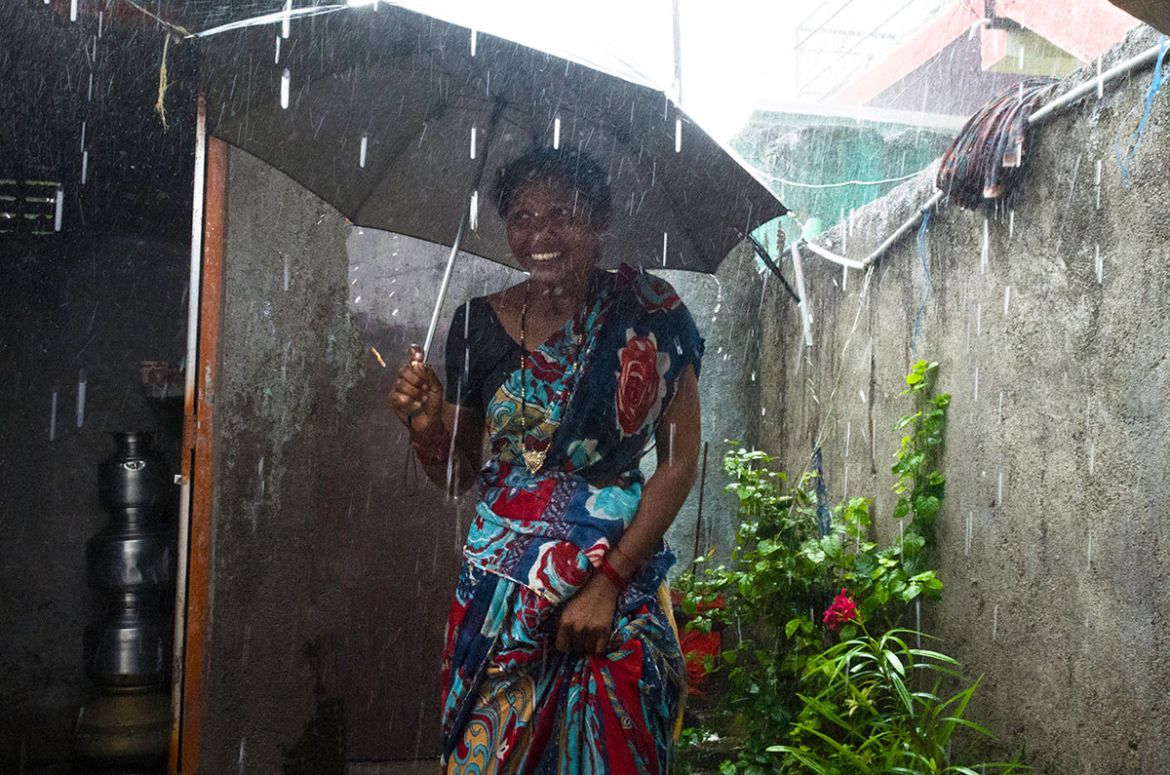
Savita is happy she can send her daughters to school through her hard work. [Deepti Asthana/Al Jazeera]

Related

  • India: The children left behind by an ancient custom

    How a centuries-old custom that allows men to pay to live with women is resulting in children being abandoned.

    Published On 26 Sep 201626 Sep 2016
    Nata Pratha Indian Tribal custom [Showkat Shafi /Al Jazeera]
    This gallery article has 14 imagescamera14
  • The salt farmers of India’s Rann of Kutch marshes

    The Agariya people brave harsh conditions producing most of India’s salt, but live in poverty and illness as a result.

    Published On 18 Sep 201618 Sep 2016
    Work in the fields start in early October, when salt farmers begin the embankment process in the salt flats, still submerged with monsoon water. [Ajay Dhamecha/Al Jazeera]
    This gallery article has 14 imagescamera14

More from Gallery

  • Photos: Manila’s streets empty as fuel prices surge amid Hormuz crisis

    A sharp increase in prices of basic commodities and the possible loss of employment for thousands of people due to the fuel price hike have raised the spectre of stagflation in the Philippines.
    This gallery article has 10 imagescamera10
  • Photos: More than one million displaced by Israel’s evacuations in Lebanon

    Over one million displaced by Israel’s evacuations in Lebanon
    This gallery article has 10 imagescamera10
  • Migrants march in southern Mexico to denounce immigration restrictions

    Migrants, some carrying children, walk on the highway through the municipality of Huehuetan, Chiapas state, Mexico, Wednesday, March 25, 2026, after leaving Tapachula the previous night. (AP Photo/Edgar H. Clemente)
    This gallery article has 9 imagescamera9
  • Photos: Iran fires new waves of missiles at Israel

    This picture shows damaged buildings at the site of an Iranian missile strike in Tel Aviv
    This gallery article has 8 imagescamera8

Most popular

  • ‘Playing with fire’: Iran vows response after civilian nuclear sites struck

    epaselect epa12854185 Rescuers work at a site following an Israeli airstrike that targeted a building in the village of Al Saksakiyah, southern Lebanon, 27 March 2026. According to the Lebanese Ministry of Public Health, at least 1,116 people have been killed and over 3,229 others injured in airstrikes across Beirut's southern suburbs and villages in southern Lebanon since the start of renewed hostilities. EPA/STRINGER
  • Iran war updates: Tehran vows retaliation for Israeli hits on nuclear sites

    TOPSHOT - This video grab taken from images released by the Iranian state broadcaster (IRIB) on March 26, 2026, shows what it says is the second phase of the 82nd wave of missiles launched against Israel and US bases in the United Arab Emirates and Kuwait.
  • US diplomat Marco Rubio denounces settler violence, tolls in Hormuz strait

    US Secretary of State Marco Rubio looks on as he speaks to the press before his departure following a G7 Foreign Ministers' meeting with Partner Countries before his departure at the Bourget airport in Le Bourget, outside Paris, France, March 27, 2026. Brendan Smialowski/Pool via REUTERS
  • Guns in the streets as US, Israel intensify month-long attacks across Iran

    TEHRAN, IRAN - MARCH 27: A resident cleans up debris in a damaged apartment across from another residential building following an airstrike in the early hours of March 27, 2026 in Tehran, Iran. The Israeli military said that it had carried out strikes on targets across Tehran and other Iranian cities overnight. The United States and Israel have continued their joint attack on Iran that began on February 28. Iran retaliated by firing waves of missiles and drones at Israel and U.S. allies in the region, while also effectively blockading the Strait of Hormuz, a critical shipping route. (Photo by Majid Saeedi/Getty Images)

  • About

    • About Us
    • Code of Ethics
    • Terms and Conditions
    • EU/EEA Regulatory Notice
    • Privacy Policy
    • Cookie Policy
    • Cookie Preferences
    • Accessibility Statement
    • Sitemap
    • Work for us
  • Connect

    • Contact Us
    • User Accounts Help
    • Advertise with us
    • Stay Connected
    • Newsletters
    • Channel Finder
    • TV Schedule
    • Podcasts
    • Submit a Tip
    • Paid Partner Content
  • Our Channels

    • Al Jazeera Arabic
    • Al Jazeera English
    • Al Jazeera Investigative Unit
    • Al Jazeera Mubasher
    • Al Jazeera Documentary
    • Al Jazeera Balkans
    • AJ+
  • Our Network

    • Al Jazeera Centre for Studies
    • Al Jazeera Media Institute
    • Learn Arabic
    • Al Jazeera Centre for Public Liberties & Human Rights
    • Al Jazeera Forum
    • Al Jazeera Hotel Partners

Follow Al Jazeera English:

  • facebook
  • twitter
  • youtube
  • instagram-colored-outline
  • rss
Al Jazeera Media Network logo
© 2026 Al Jazeera Media Network