Skip linksSkip to Content
play
Live
Navigation menu
  • News
    • Africa
    • Asia
    • US & Canada
    • Latin America
    • Europe
    • Asia Pacific
  • Middle East
  • Explained
  • Opinion
  • Sport
  • Video
    • Features
    • Economy
    • Human Rights
    • Climate Crisis
    • Investigations
    • Interactives
    • In Pictures
    • Science & Technology
    • Podcasts
    • Travel
play
Live

In Pictures

Gallery|Business and Economy

Into the green land: Emerald mining in Colombia

Emerald seekers scour Colombia’s Muzo Valley, searching for the gem that could lift them out of poverty.
Save

Share

facebooktwitterwhatsappcopylink
Into the Green Land/ Please Do Not Use
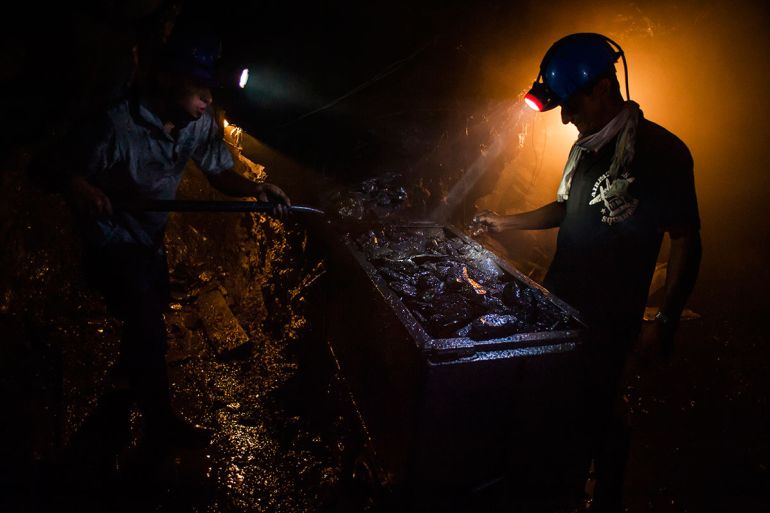
Two miners from an unregulated emerald mine in Pauna, Western Boyaca, look for signs of emeralds in the dark, poorly ventilated mine. [Javier Corso/OAK stories/Al Jazeera]
By Javier Corso
Published On 20 Mar 201720 Mar 2017

Muzo, Colombia – The struggle over land is Colombia‘s oldest conflict.

For decades the mines of Muzo – widely known as the “emerald capital of the world” – have produced great fortunes for their owners.

In the so-called “Green Wars” during the 1980s, territorial disputes escalated into full-blown conflict as the country’s leading mining families fought over territory.

In those days, the “barequeros” – emerald seekers who dig through debris – gathered by the thousands around the Muzo Valley, hoping that emeralds would arise from the dark soil to rescue them from extreme poverty.

While the Green Wars are over, there is still a low-level conflict of assassinations and murders as rival groups vie for access to the gemstones.

Although Colombian environmental laws now prohibit the dumping of leftover grit and rocks from mining excavation, some surplus debris continues to be dumped on land and rivers around the mines. A few dozen emerald seekers scour this debris, often using their bare hands. Others mine the area informally.

The barequeros tend to live a tough existence in slums on the hillsides of surrounding mountains, without running water or services.

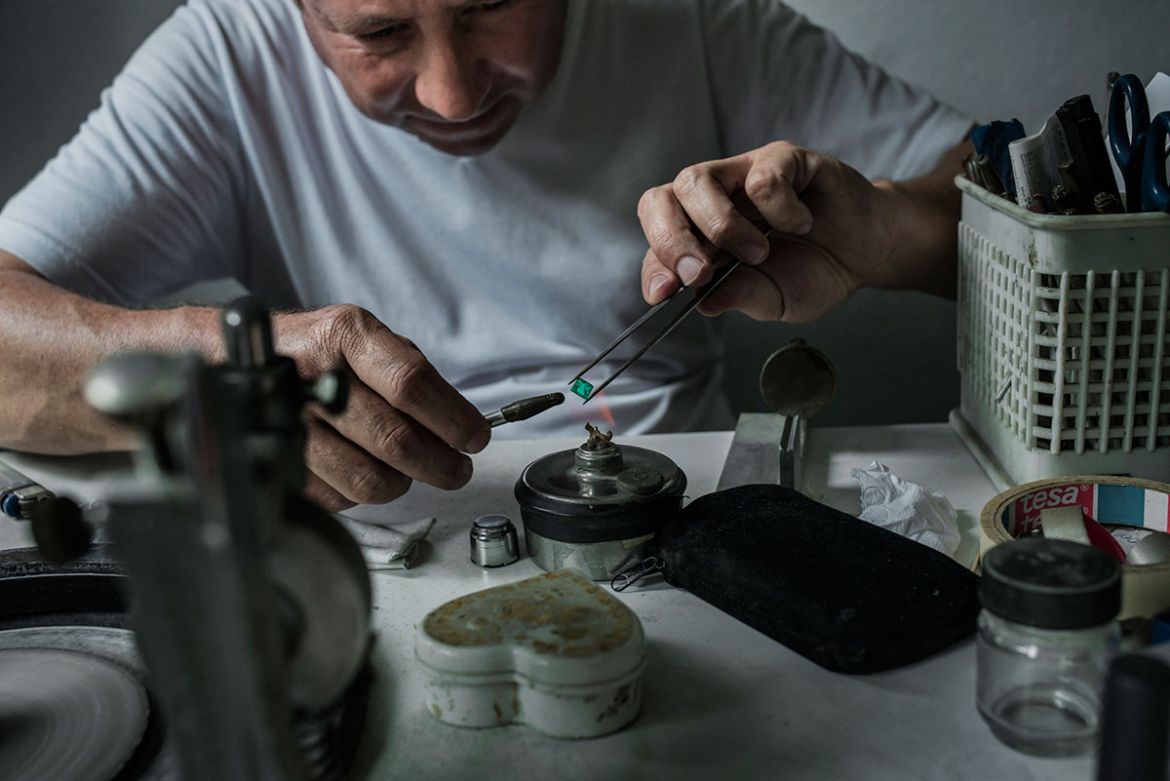
When a barequero finds an emerald, they can either try to pay a carver to re-work and increase the value of the gemstone or, if the emerald already has a notable value, they will sell it to a merchant who trades the gems directly on the streets of the capital Bogota.

In this system of both legal and informal activities, the wealth extracted from Colombian mines is very difficult to calculate. This also applies to the value of the emerald itself; its price is based on a series of characteristics – such as colour, size, carve, and transparency – and varies depending on whose hands hold them.

Advertisement

It is easier to sell the emeralds on the market if they are already carved, but some buyers prefer the raw, uncut emeralds to oversee this delicate process themselves, before selling it on international markets. Around 95 percent of Colombian emeralds are destined for export.

Colombia is a country with a largely poor population living on an incredibly rich soil. The right to exploit its resources is an ongoing struggle in which the weakest have to fight for survival.

Into the Green Land/ Please Do Not Use
A miner from La Pita mine, Maripi, holds an emerald rock. Its commercial value is low because the gems that can be extracted after carving are very small. [Javier Corso/OAK stories/Al Jazeera]
Advertisement
Into the Green Land/ Please Do Not Use
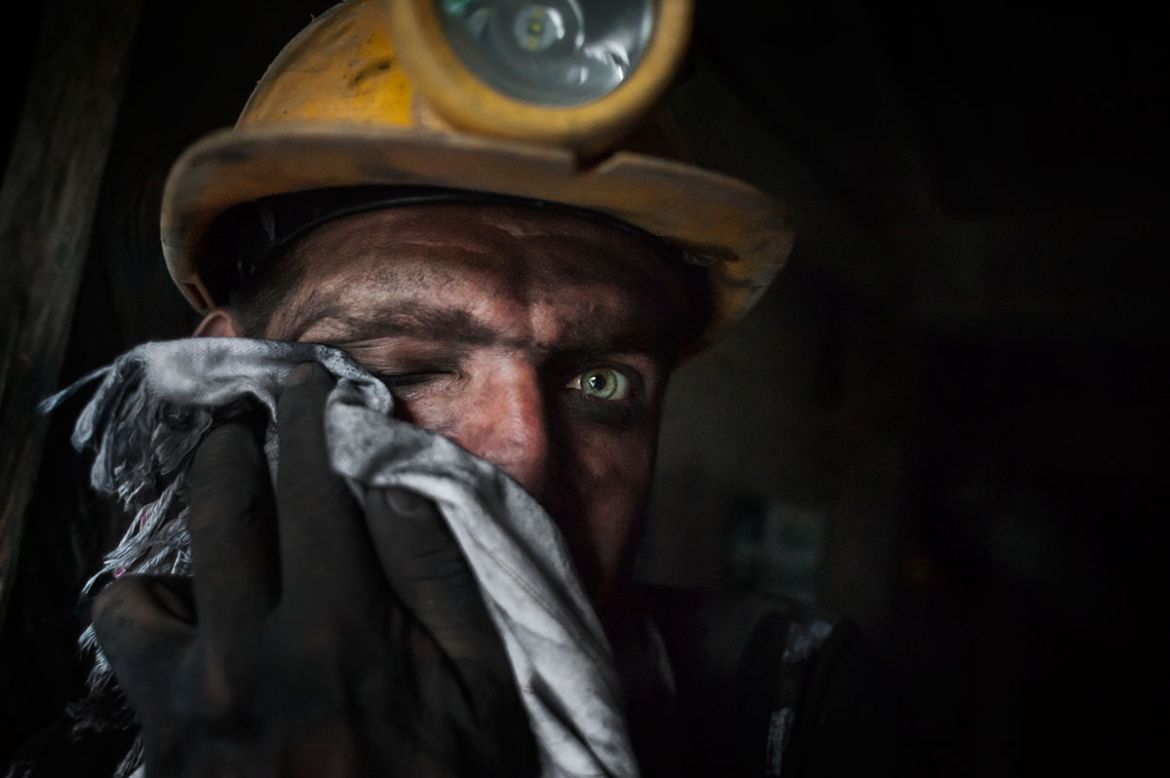
Jorge Gutierrez works at La Pita mine. His green eyes identify him as hailing from the Santander region; a rare background in Muzo, where most descend from the Muzo indigenous people. [Javier Corso/OAK stories/Al Jazeera]
Into the Green Land/ Please Do Not Use
The surplus debris from mining excavations is deposited in the surroundings of the tunnels or thrown into the river. This very common practice is prohibited by Colombia's environmental laws, which have been strengthened recently. [Javier Corso/OAK stories/Al Jazeera]
Into the Green Land/ Please Do Not Use
The mining river crosses the west of Boyaca. Different companies extract emeralds from the nearby mountains, and the miners and barequeros establish bases nearby. [Javier Corso/OAK stories/Al Jazeera]
Into the Green Land/ Please Do Not Use
Jose Elias Vallejo has been a barequero in the ravine of the mining river for more than 40 years. He lives in Matadecafe, an informal settlement of shanty towns in the vicinity of the Muzo mines. [Javier Corso/OAK stories/Al Jazeera]
Into the Green Land/ Please Do Not Use
Jaime Vargas lost his leg in a mine accident. Since then, he dedicates himself to seeking emeralds in the ravine with Luis Gomez and Marcos Errada. [Javier Corso/OAK stories/Al Jazeera]
Advertisement
Into the Green Land/ Please Do Not Use
A group of barequeros stir up the land of the mining river with the aid of their shovels and their bare hands. Carlos Salamanca, foreground, is one of the elders in the region. [Javier Corso/OAK stories/Al Jazeera]
Into the Green Land/ Please Do Not Use
Scouring the earth is a fully manual job and requires the ability to detect the green glow of small emerald sparkles that may appear mixed with the black rock. [Javier Corso/OAK stories/Al Jazeera]
Into the Green Land/ Please Do Not Use
The stones that they can find today in the ravine are small and of low value. When they do find something, the barequero usually hides the sparkles of emerald in their mouth to preserve it and to avoid raising envy among their companions. [Javier Corso/OAK stories/Al Jazeera]
Into the Green Land/ Please Do Not Use
A female barequera rests after having travelled several miles from her house in search of emeralds. [Javier Corso/OAK stories/Al Jazeera]
Into the Green Land/ Please Do Not Use
There are only a few women among the barequeros and miners. Many of them work in 'cantinas' - food and alcohol stores in the suburbs, and also washing the clothes of guaqueros and miners. [Javier Corso/OAK stories/Al Jazeera]
Into the Green Land/ Please Do Not Use
Fredy Mantilla, a carver in Muzo, polishes an emerald in his workshop located in his house. When a miner or barequero finds an emerald and manages to keep it to himself, he can sell the rough stone directly or pay a trusted carver to re-value the stone. [Javier Corso/OAK stories/Al Jazeera]
Into the Green Land/ Please Do Not Use
Miners, barequeros, merchants and tourists make deals every day in the market of Muzo in search of the best emeralds. The emerald trade is carried out in small scale at the surroundings of the Avenue Jimenez, Bogota. There are many shops and workshops in the neighbourhood dedicated to valuing, carving, and selling these precious stones. [Javier Corso/OAK stories/Al Jazeera]
Into the Green Land/ Please Do Not Use
Monsignor Hector Gutierrez was the mediator of the peace process between emerald mine owners during the Green Wars. He wears a golden ring with six emeralds embedded forming a cross. The ring is a gift from the deceased Victor Carranza, a renowned emerald leader and a close friend of the bishop. [Javier Corso/OAK stories/Al Jazeera]

Related

  • From: Counting the Cost

    Is Europe heading to an energy crisis?

    Europe is bracing for a supply crunch and a price shock as the Iran conflict drags on.

    Published On 27 Mar 202627 Mar 2026
    Video Duration 28 minutes 05 seconds play-arrow28:05
  • Norway to add more than $11bn to defence budget over 10 years

    Norway, as well as other NATO countries, has been under pressure from the US to boost defence spending.

    Published On 27 Mar 202627 Mar 2026
    Norway
  • Yemenis fear economic consequences of being dragged into US-Iran conflict

    Iran-allied Houthis yet to get involved in conflict, but could target shipping in Red Sea.

    Published On 27 Mar 202627 Mar 2026
    Supporters of Yemen's Houthi rebels hold a placard bearing a portrait of Iran’s slain supreme leader Ayatollah Ali Khamenei during the Al-Quds (Jerusalem) Day rally, a commemoration in support of the Palestinian people on the last Friday of the Islamic holy month of Ramadan, in Sanaa on March 13, 2026.
  • India lowers fuel taxes, says rumours of lockdown ‘completely false’

    India, the world’s third biggest crude importer, announces measures amid shortages created by the Iran war.

    Published On 27 Mar 202627 Mar 2026
    india oil

More from Gallery

  • Photos: Manila’s streets empty as fuel prices surge amid Hormuz crisis

    A sharp increase in prices of basic commodities and the possible loss of employment for thousands of people due to the fuel price hike have raised the spectre of stagflation in the Philippines.
    This gallery article has 10 imagescamera10
  • Photos: More than one million displaced by Israel’s evacuations in Lebanon

    Over one million displaced by Israel’s evacuations in Lebanon
    This gallery article has 10 imagescamera10
  • Migrants march in southern Mexico to denounce immigration restrictions

    Migrants, some carrying children, walk on the highway through the municipality of Huehuetan, Chiapas state, Mexico, Wednesday, March 25, 2026, after leaving Tapachula the previous night. (AP Photo/Edgar H. Clemente)
    This gallery article has 9 imagescamera9
  • Photos: Iran fires new waves of missiles at Israel

    This picture shows damaged buildings at the site of an Iranian missile strike in Tel Aviv
    This gallery article has 8 imagescamera8

Most popular

  • Tehran vows to extract ‘heavy price’ for Israeli hits on two nuclear sites

    TOPSHOT - This video grab taken from images released by the Iranian state broadcaster (IRIB) on March 26, 2026, shows what it says is the second phase of the 82nd wave of missiles launched against Israel and US bases in the United Arab Emirates and Kuwait.
  • US diplomat Marco Rubio denounces settler violence, tolls in Hormuz strait

    US Secretary of State Marco Rubio looks on as he speaks to the press before his departure following a G7 Foreign Ministers' meeting with Partner Countries before his departure at the Bourget airport in Le Bourget, outside Paris, France, March 27, 2026. Brendan Smialowski/Pool via REUTERS
  • FBI director Kash Patel’s emails, photos hacked by Iran-linked group

    FILE PHOTO: FBI Director Kash Patel announces the apprehension of Ryan Wedding, a former Canadian Olympic snowboarder who was on the FBI's Ten Most Wanted Fugitive list, during a press conference in Ontario, California, U.S., January 23, 2026. REUTERS/Mike Blake//File Photo
  • How extensive is Russia’s military aid to Iran?

    Iranian missile strikes

  • About

    • About Us
    • Code of Ethics
    • Terms and Conditions
    • EU/EEA Regulatory Notice
    • Privacy Policy
    • Cookie Policy
    • Cookie Preferences
    • Accessibility Statement
    • Sitemap
    • Work for us
  • Connect

    • Contact Us
    • User Accounts Help
    • Advertise with us
    • Stay Connected
    • Newsletters
    • Channel Finder
    • TV Schedule
    • Podcasts
    • Submit a Tip
    • Paid Partner Content
  • Our Channels

    • Al Jazeera Arabic
    • Al Jazeera English
    • Al Jazeera Investigative Unit
    • Al Jazeera Mubasher
    • Al Jazeera Documentary
    • Al Jazeera Balkans
    • AJ+
  • Our Network

    • Al Jazeera Centre for Studies
    • Al Jazeera Media Institute
    • Learn Arabic
    • Al Jazeera Centre for Public Liberties & Human Rights
    • Al Jazeera Forum
    • Al Jazeera Hotel Partners

Follow Al Jazeera English:

  • facebook
  • twitter
  • youtube
  • instagram-colored-outline
  • rss
Al Jazeera Media Network logo
© 2026 Al Jazeera Media Network