Skip linksSkip to Content
play
Live
Navigation menu
  • News
    • Africa
    • Asia
    • US & Canada
    • Latin America
    • Europe
    • Asia Pacific
  • Middle East
  • Explained
  • Opinion
  • Sport
  • Video
    • Features
    • Economy
    • Human Rights
    • Climate Crisis
    • Investigations
    • Interactives
    • In Pictures
    • Science & Technology
    • Podcasts
    • Travel
play
Live

In Pictures

Gallery|Drugs

Photos: Despair and poverty fuel drug use in Afghanistan

Drug addiction has long been a problem in Afghanistan, the world’s biggest producer of opium and now a chief source of methamphetamines.
Save

Share

facebooktwitterwhatsappcopylink
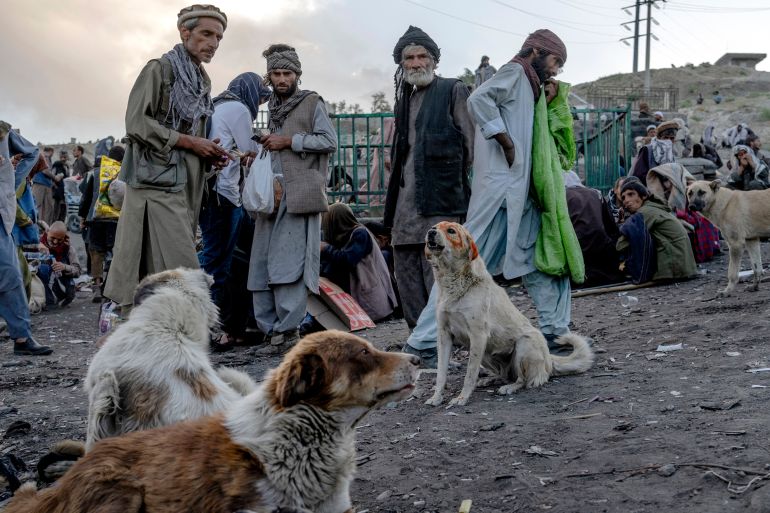
Hundreds of Afghans addicts gather on the edge of a hill to consume drugs
Hundreds of Afghan addicts gather on the edge of a hill to consume drugs, mostly heroin and methamphetamines, in Kabul. [Ebrahim Noroozi/AP Photo]
By AP
Published On 25 Jul 202225 Jul 2022

Drug addiction has long been a problem in Afghanistan, the world’s biggest producer of opium and heroin and now a chief source of methamphetamine.

Drug use has been driven by persistent poverty and decades of war that left few families unscarred.

It appears to be getting worse since the country’s economy collapsed following the seizure of power by the Taliban in August 2021 and the subsequent halt of international financing.

Families once able to get by found their sources of income cut off, leaving many barely able to afford food. Millions have joined the ranks of the impoverished.

Drug users can be found around the capital, Kabul, living in parks and sewage drains, under bridges and on open hillsides.

A 2015 survey by the United Nations estimated that up to 2.3 million people had used drugs that year, which would have amounted to about 5 percent of the population at the time.

Seven years later, the number is not known, but it is believed to have only increased, according to Dr Zalmel, the head of the Drug Demand Reduction Department, who like many Afghans, uses only one name.

The Taliban has launched an aggressive campaign to eradicate poppy cultivation. At the same time, they inherited the deposed, internationally-backed government’s policy of forcing drug users into camps.

Earlier this summer, Taliban fighters stormed two areas frequented by drug users, one on the hillside and another under a bridge.

They collected about 1,500 people, officials said. They were taken to the Avicenna Medical Hospital for Drug Treatment, a former United States military base. It is the largest of several treatment camps around Kabul.

Advertisement

There, the residents were shaved and kept in a barracks for 45 days. They receive no treatment or medication as they go through withdrawal. The camp barely has enough money to feed those who live there.

Such camps do little to treat addiction.

A week after the raids, both locations were once again full of hundreds of people using drugs.

Man in camp for addicts
Drug addiction has long been a problem in Afghanistan, the world’s biggest producer of opium and heroin. [Ebrahim Noroozi/AP Photo]
Advertisement
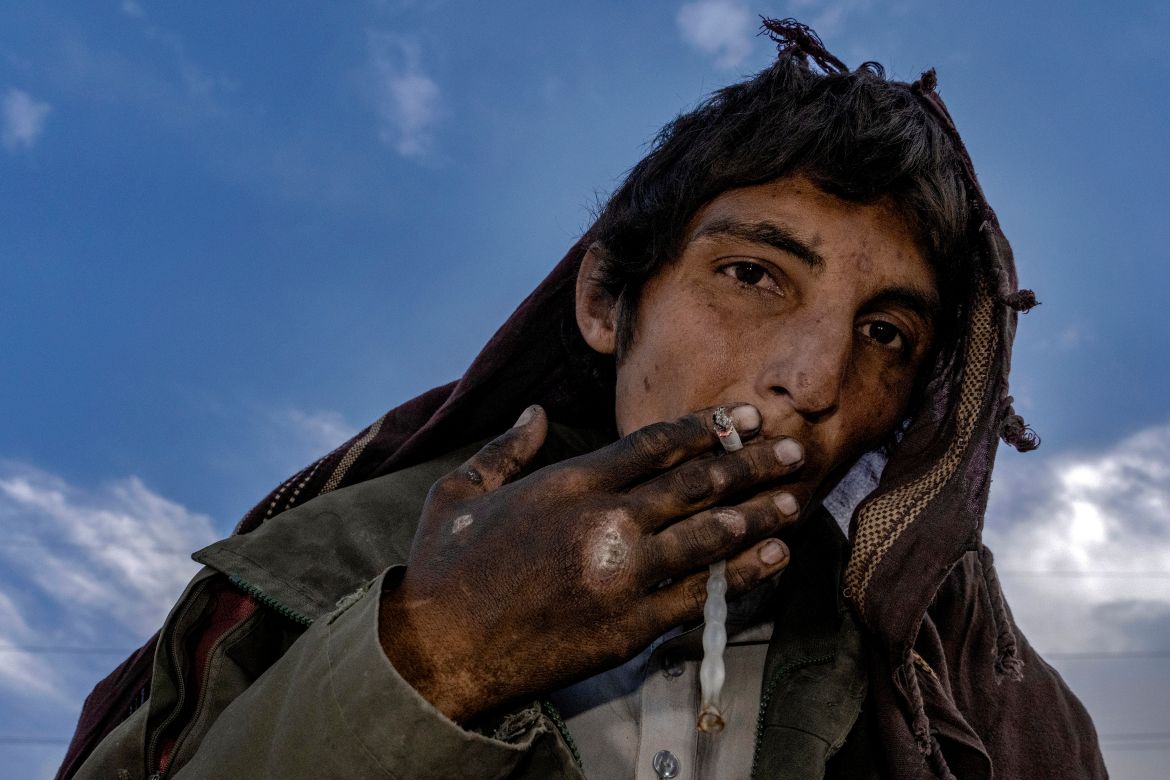
An Afghan drug addict smokes heroin
The ranks of the addicted have been increased by persistent poverty and by decades of war that left few families unscarred. [Ebrahim Noroozi/AP Photo]
Hundreds of Afghans addicts gather under a bridge to consume drugs, mostly heroin and metha
Hundreds of addicts gather under a bridge to consume drugs, in Kabul. [Ebrahim Noroozi/AP Photo]
An Afghan drug addict smokes heroin
A 2015 survey by the UN estimated that up to 2.3 million people had used drugs that year, which would have amounted to about 5 percent of the population at the time. [Ebrahim Noroozi/AP Photo]
Afghans addicts gather under a bridge to consume drugs
Today the number of drug addicts is not known, but it is believed to have only increased, according to Dr Zalmel, the head of the Drug Demand Reduction Department. [Ebrahim Noroozi/AP Photo]
Man in camp for addicts
Addicts gather under a bridge to consume drugs. [Ebrahim Noroozi/AP Photo]
Advertisement
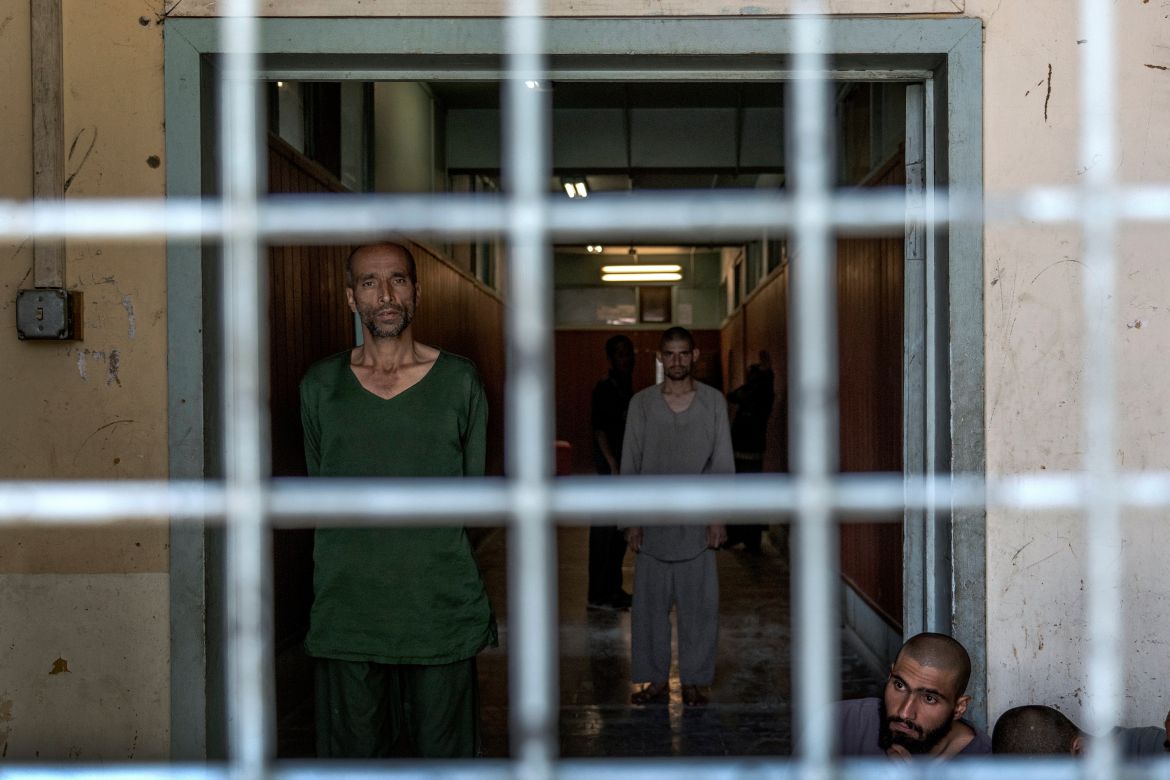
Drug addicts undergoing treatment stand in the detoxification ward
Drug addicts undergoing treatment stand in the detoxification ward of a drug treatment camp in Kabul. [Ebrahim Noroozi/AP Photo]
Drug addicts detained during a Taliban raid
The Taliban has launched an aggressive campaign to eradicate poppy cultivation. [Ebrahim Noroozi/AP Photo]
Drug addictS detained during a Taliban raid
The Taliban also inherited the removed internationally-backed government's policy of forcing drug users into camps. [Ebrahim Noroozi/AP Photo]
Drug addicts undergoing treatment eat in a dining hall
Earlier this summer, Taliban fighters stormed two areas frequented by drug users and collected about 1,500 people who were taken to the Avicenna Medical Hospital for Drug Treatment, a former US military base. [Ebrahim Noroozi/AP Photo]
Drug addicts rest on their bed
The patients in the drug treatment camps receive no treatment or medication as they go through withdrawal. [Ebrahim Noroozi/AP Photo]
A drug addict sits on his bed in the detoxification ward
A drug addict sits on his bed in the detoxification ward of a drug treatment camp in Kabul. [Ebrahim Noroozi/AP Photo]

Related

  • Now in power, Taliban sets sights on Afghan drug underworld

    Afghanistan’s new rulers set their sights on stamping out widespread drug addiction in their country, even if by force.

    Published On 11 Oct 202111 Oct 2021
    Drug users detained during a Taliban raid walk in line on their way to the detoxification ward of the Avicenna Medical Hospital for Drug Treatment in Kabul. [Felipe Dana/AP Photo]
    This gallery article has 11 imagescamera11
  • Nearly 10 million children going hungry in Afghanistan, says NGO

    Save the Children says almost 50 percent of the population needs urgent support to survive despite continuing food aid.

    Published On 10 May 202210 May 2022
    A woman holds her baby at a camp for internally displaced people
  • In Afghanistan, ‘people selling babies, young girls to survive’

    Dire economic situation sees children dying of starvation as millions of Afghans struggle to put food on their tables.

    Published On 31 Mar 202231 Mar 2022
    A family prepares tea outside the Directorate of Disaster office where they are camped, in Herat, Afghanistan
  • How are women faring as Afghanistan’s problems deepen?

    Women and girls urge end to restrictions imposed by ruling Taliban amid worsening economic and humanitarian crises.

    Published On 6 Jul 20226 Jul 2022
    women-afghanistan
    Video Duration play-arrow

More from Gallery

  • Photos: Manila’s streets empty as fuel prices surge amid Hormuz crisis

    A sharp increase in prices of basic commodities and the possible loss of employment for thousands of people due to the fuel price hike have raised the spectre of stagflation in the Philippines.
    This gallery article has 10 imagescamera10
  • Photos: More than one million displaced by Israel’s evacuations in Lebanon

    Over one million displaced by Israel’s evacuations in Lebanon
    This gallery article has 10 imagescamera10
  • Migrants march in southern Mexico to denounce immigration restrictions

    Migrants, some carrying children, walk on the highway through the municipality of Huehuetan, Chiapas state, Mexico, Wednesday, March 25, 2026, after leaving Tapachula the previous night. (AP Photo/Edgar H. Clemente)
    This gallery article has 9 imagescamera9
  • Photos: Iran fires new waves of missiles at Israel

    This picture shows damaged buildings at the site of an Iranian missile strike in Tel Aviv
    This gallery article has 8 imagescamera8

Most popular

  • Iran targets Saudi capital, hits Kuwait port as Middle East tensions surge

    TOPSHOT - This video grab taken from images released by the Iranian state broadcaster (IRIB) on March 26, 2026, shows what it says is the second phase of the 82nd wave of missiles launched against Israel and US bases in the United Arab Emirates and Kuwait.
  • How extensive is Russia’s military aid to Iran?

    Iranian missile strikes
  • Saudi, UAE, Iraq: Can three pipelines help oil escape Strait of Hormuz?

    TOPSHOT - Indian vessel 'Nanda Devi' carrying liquefied petroleum gas (LPG) arrives at Vadinar Port in the Jamnagar district of Gujarat state on March 17, 2026 after Iran allowed it to pass through the Strait of Hormuz, a key energy corridor that remains disrupted by the Middle East war.
  • US-Israel war on Iran: What’s happening on day 28 of attacks?

    Protesters attend a rally.

  • About

    • About Us
    • Code of Ethics
    • Terms and Conditions
    • EU/EEA Regulatory Notice
    • Privacy Policy
    • Cookie Policy
    • Cookie Preferences
    • Accessibility Statement
    • Sitemap
    • Work for us
  • Connect

    • Contact Us
    • User Accounts Help
    • Advertise with us
    • Stay Connected
    • Newsletters
    • Channel Finder
    • TV Schedule
    • Podcasts
    • Submit a Tip
    • Paid Partner Content
  • Our Channels

    • Al Jazeera Arabic
    • Al Jazeera English
    • Al Jazeera Investigative Unit
    • Al Jazeera Mubasher
    • Al Jazeera Documentary
    • Al Jazeera Balkans
    • AJ+
  • Our Network

    • Al Jazeera Centre for Studies
    • Al Jazeera Media Institute
    • Learn Arabic
    • Al Jazeera Centre for Public Liberties & Human Rights
    • Al Jazeera Forum
    • Al Jazeera Hotel Partners

Follow Al Jazeera English:

  • facebook
  • twitter
  • youtube
  • instagram-colored-outline
  • rss
Al Jazeera Media Network logo
© 2026 Al Jazeera Media Network