Skip linksSkip to Content
play
Live
Navigation menu
  • News
    • Africa
    • Asia
    • US & Canada
    • Latin America
    • Europe
    • Asia Pacific
  • Middle East
  • Explained
  • Opinion
  • Sport
  • Video
    • Features
    • Economy
    • Human Rights
    • Climate Crisis
    • Investigations
    • Interactives
    • In Pictures
    • Science & Technology
    • Podcasts
    • Travel
play
Live

In Pictures

Gallery|Drugs

Aiming a blow at narcos, Colombia pays farmers to uproot coca

Farmers paid to replace coca with coffee and cocoa, but risks and doubts persist in conflict zones.

Save

Share

facebooktwitterwhatsappcopylink
Aiming a blow at narcos, Colombia pays farmers to uproot coca
Farmers Nicolas and Alirio Caicedo show coffee beans and coca leaves at their plantation in Argelia, Cauca department. [Joaquin Sarmiento/AFP]
By AFP
Published On 3 Jun 20253 Jun 2025

As cocaine production reaches an unprecedented high, Colombia’s government is trialling a more peaceful remedy to its enduring narcotics crisis – offering payments to farmers to uproot coca crops, the primary ingredient in the drug.

Alirio Caicedo and his son Nicolas are among the latest beneficiaries. A decade ago, they planted their fields with coca, staking their livelihoods on the persistent demand from criminal gangs.

Now, the Caicedos are digging up those same crops, uncertain of what the future holds.

They are joined by about 4,000 other Colombian families who have entered into agreements with the government to replace coca with cocoa and coffee.

The initiative forms part of a $14.4m effort aimed at reducing the supply of a substance blamed for inflicting immeasurable misery on the country.

Colombia’s rural communities are often coerced by armed groups into cultivating coca, with forests cleared to make way for the illicit crop.

Authorities are aiming to eradicate coca on 45,000 hectares (111,000 acres) in three of Colombia’s most conflict-ridden regions, including the southwestern Micay Canyon.

Aiming a blow at narcos, Colombia pays farmers to uproot coca
Coffee and coca leaf farmer Alirio Caicedo at a plantation [Joaquin Sarmiento/AFP]

For farmers like the Caicedos, the transition is fraught with risk.

There is no guarantee their new crops will thrive, nor that guerrillas and other armed groups – whose revenues are tied to cocaine – will leave them in peace.

With coca, the Caicedos say they could count on earning approximately $800 a month. Under the new scheme, they have received an initial payment of about $300 to begin cultivating coffee, with more in the pipeline.

Advertisement

Gustavo Petro, Colombia’s first left-wing president, assumed office in 2022 with a pledge to shift his country away from the United States-led “war on drugs” – a campaign widely blamed for the double victimisation of rural Colombians living under the shadow of violence.

Since then, cocaine production in Colombia – the world’s largest exporter – has soared to record levels, driven by sustained demand in Europe and the US.

Previous attempts at crop substitution have failed, often undermined by the disruptive actions of armed groups and the eventual drying up of government support.

Gloria Miranda, who heads Colombia’s illegal crop substitution programme, cautioned that it would be naive to believe the new initiative could end drug trafficking “as long as there is a market of 20 million consumers and it (cocaine) remains illegal”.

President Petro, in his pursuit of “total peace”, has prioritised negotiation with armed groups over military confrontation, rolling back forced coca eradication.

Aiming a blow at narcos, Colombia pays farmers to uproot coca
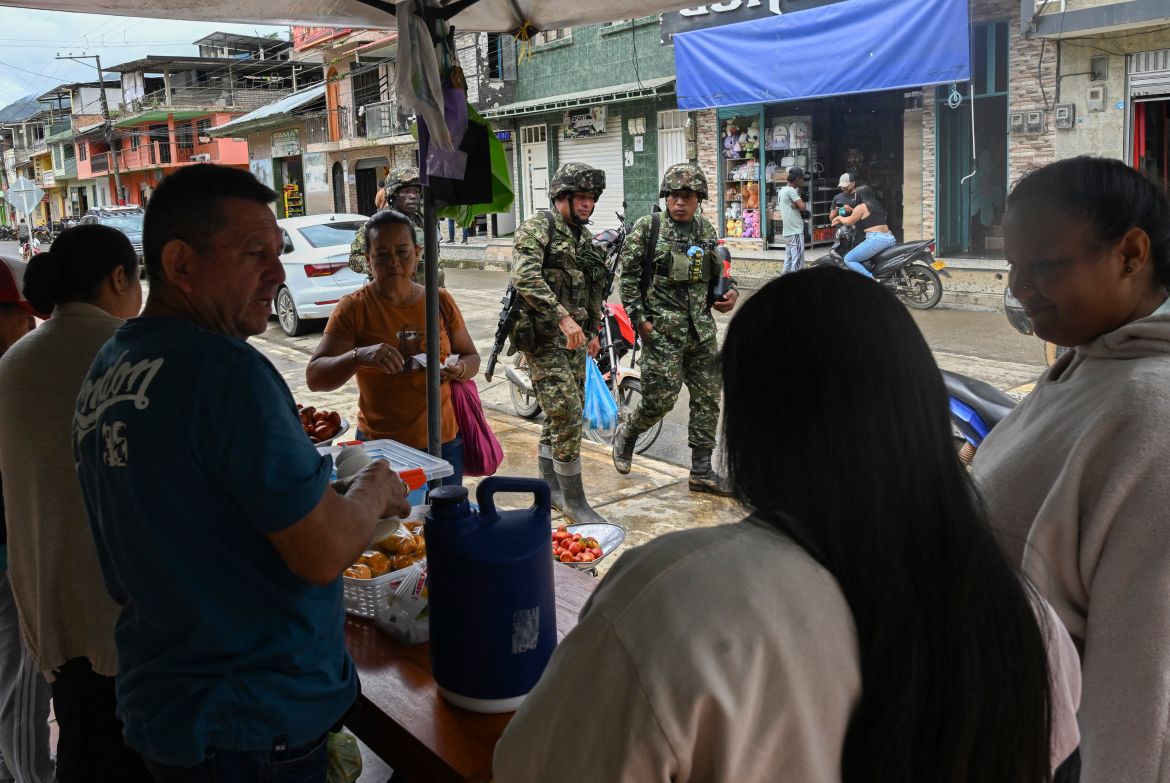
Colombian soldiers and policemen stand guard in a street in Argelia [Joaquin Sarmiento/AFP]

However, most talks have faltered, and the return of Donald Trump to the White House in January has intensified pressure on Bogota. The Trump administration is reassessing Colombia’s status as a partner in the anti-drug campaign, threatening to curtail millions of dollars in military aid.

Given the high stakes, observers are concerned the crop replacement scheme may be exploited.

Some farmers may “try to deceive” by accepting state funds while continuing to cultivate coca, warned Argelia’s government secretary, Pablo Daza.

Without rigorous oversight, “the chances are quite high that we are wasting money,” said Emilio Archila, who oversaw a similar, ultimately unsuccessful, programme under former President Ivan Duque.

Miranda insists that “meticulous” satellite monitoring will ensure compliance, promising that anyone found in breach will be expelled from the programme.

While coca is best known as the raw material for cocaine, its leaves are chewed as a stimulant in Andean cultures and brewed as a tea believed to alleviate altitude sickness.

Colombia has repeatedly called for coca leaf to be removed from the United Nations list of harmful narcotics in order to license its use in alternative products, such as fertilisers or beverages – appeals which, for now, remain unanswered.

Aiming a blow at narcos, Colombia pays farmers to uproot coca
A motorbike rides past a mixed coffee and coca leaf plantation in Argelia. [Joaquin Sarmiento/AFP]
Advertisement
Aiming a blow at narcos, Colombia pays farmers to uproot coca
The Caicedos pull plants out of the ground as they transform a coca leaf plantation into a coffee plantation. [Joaquin Sarmiento/AFP]
Aiming a blow at narcos, Colombia pays farmers to uproot coca
Colombian soldiers patrol the streets in Argelia. [Joaquin Sarmiento/AFP]
Aiming a blow at narcos, Colombia pays farmers to uproot coca
About 4,000 Colombian families have entered into an agreement with the government to replace coca with alternative crops, such as cocoa and coffee. [Joaquin Sarmiento/AFP]
Aiming a blow at narcos, Colombia pays farmers to uproot coca
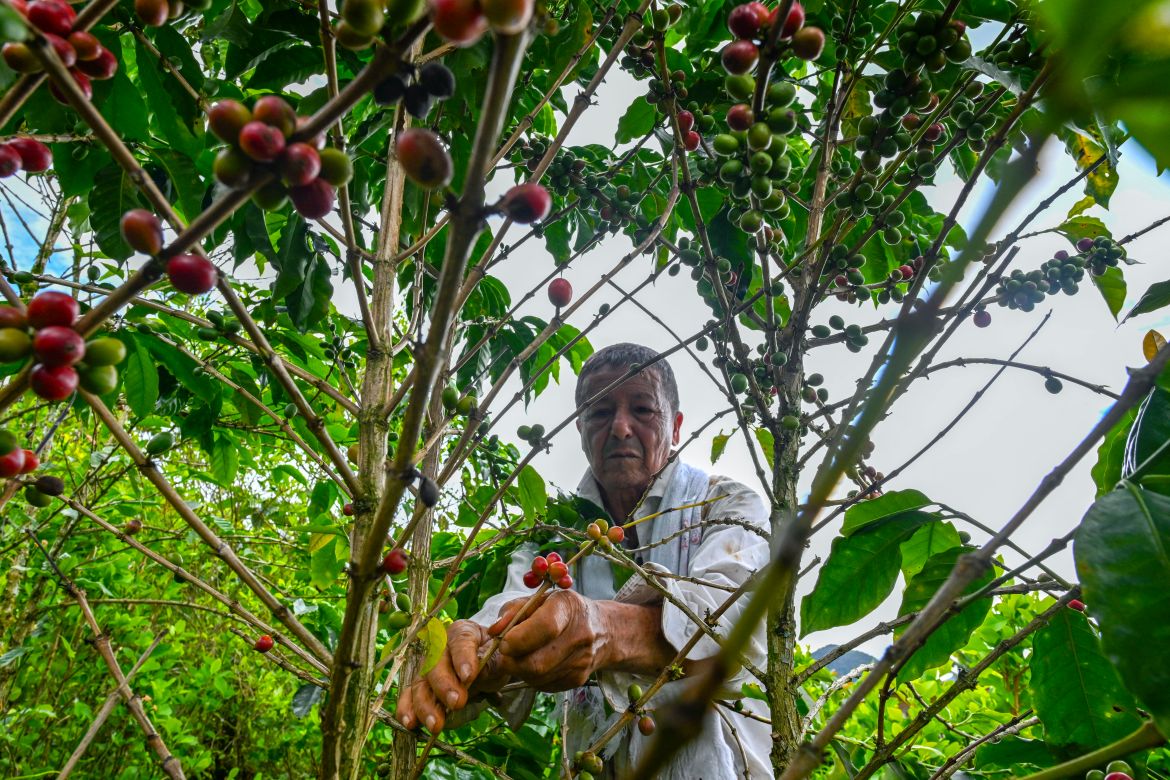
Alirio Caicedo picks coffee beans at his plantation in Argelia. [Joaquin Sarmiento/AFP]
Aiming a blow at narcos, Colombia pays farmers to uproot coca
Authorities aim to eradicate coca on 45,000 hectares in three of Colombia’s most conflict-ridden regions, including the southwestern Micay Canyon. [Joaquin Sarmiento/AFP]
Advertisement
Aiming a blow at narcos, Colombia pays farmers to uproot coca
Previous attempts at crop substitution have failed, often undermined by the disruptive actions of armed groups and the eventual drying up of government support. [Joaquin Sarmiento/AFP]
Aiming a blow at narcos, Colombia pays farmers to uproot coca
Colombia has repeatedly called for coca leaf to be removed from the UN’s list of harmful narcotics in order to license its use in alternative products, such as fertilisers or beverages – appeals which, for now, remain unanswered. [Joaquin Sarmiento/AFP]
Related

  • Colombia seeks to reassert control as rebel fighting kills over 100

    Government sends troops into coca-rich northeast Catatumbo region in bid to quell hostilities among rebel groups.

    Published On 22 Jan 202522 Jan 2025
    An Army soldier patrols in Tibu Colombia
  • A referendum on crime? What to know about Ecuador’s presidential election

    President Daniel Noboa hopes to secure a full four-year term but faces concerns over high crime and economic issues.

    Published On 6 Feb 20256 Feb 2025
    Daniel Noboa wearing a sash in the colors of the Ecuador flag and sunglasses
  • Trump’s tariffs: A simple illustrated guide to 15 economic terms to know

    What do terms like tariffs, trade deficits, trade wars, bonds, and recession mean in simple language?

    Published On 11 Apr 202511 Apr 2025
    Interactive_IllustratedGuide_Economy_April11_2025_HERO
  • Superfood ‘red espresso’ made from South African tea takes off globally

    The husband and wife duo behind a superfood ‘coffee’ focus on community upliftment as well as caffeine-free kicks.

    Published On 27 Oct 202427 Oct 2024
    Superfood espresso made from rooibos

More from Gallery

  • Photos: Manila’s streets empty as fuel prices surge amid Hormuz crisis

    A sharp increase in prices of basic commodities and the possible loss of employment for thousands of people due to the fuel price hike have raised the spectre of stagflation in the Philippines.
    This gallery article has 10 imagescamera10
  • Photos: More than one million displaced by Israel’s evacuations in Lebanon

    Over one million displaced by Israel’s evacuations in Lebanon
    This gallery article has 10 imagescamera10
  • Migrants march in southern Mexico to denounce immigration restrictions

    Migrants, some carrying children, walk on the highway through the municipality of Huehuetan, Chiapas state, Mexico, Wednesday, March 25, 2026, after leaving Tapachula the previous night. (AP Photo/Edgar H. Clemente)
    This gallery article has 9 imagescamera9
  • Photos: Iran fires new waves of missiles at Israel

    This picture shows damaged buildings at the site of an Iranian missile strike in Tel Aviv
    This gallery article has 8 imagescamera8

Most popular

  • Trump talks up deal with Tehran as Iranian missile, drone attacks continue

    FILE PHOTO: Emergency personnel respond at a site following Iranian missile barrages in central Israel, amid the U.S.-Israel conflict with Iran, in Tel Aviv, Israel, March 24, 2026. REUTERS/Tomer Appelbaum ISRAEL OUT. NO COMMERCIAL OR EDITORIAL SALES IN ISRAEL/File Photo
  • Iran war updates: US, Israel attack ignites worst trade rupture in 80 years

    This handout image taken by the European Space Agency (ESA) captured by the Copernicus Sentinel-2 satellite shows a view of smoke plumes billowing in the vicinity Kuwait International Airport on March 25, 2026.
  • Tehran’s ‘toll booth’: How Iran picks who to let through Strait of Hormuz

    The Callisto tanker sits anchored in Port Sultan Qaboos as the traffic is down in the Strait of Hormuz
  • Trump says Iran ‘begging’ for deal to end war as Tehran issues new demands

    A woman holds a picture of the Iranian Supreme Leader Ayatollah Mojtaba Khamenei

  • About

    • About Us
    • Code of Ethics
    • Terms and Conditions
    • EU/EEA Regulatory Notice
    • Privacy Policy
    • Cookie Policy
    • Cookie Preferences
    • Accessibility Statement
    • Sitemap
    • Work for us
  • Connect

    • Contact Us
    • User Accounts Help
    • Advertise with us
    • Stay Connected
    • Newsletters
    • Channel Finder
    • TV Schedule
    • Podcasts
    • Submit a Tip
    • Paid Partner Content
  • Our Channels

    • Al Jazeera Arabic
    • Al Jazeera English
    • Al Jazeera Investigative Unit
    • Al Jazeera Mubasher
    • Al Jazeera Documentary
    • Al Jazeera Balkans
    • AJ+
  • Our Network

    • Al Jazeera Centre for Studies
    • Al Jazeera Media Institute
    • Learn Arabic
    • Al Jazeera Centre for Public Liberties & Human Rights
    • Al Jazeera Forum
    • Al Jazeera Hotel Partners

Follow Al Jazeera English:

  • facebook
  • twitter
  • youtube
  • instagram-colored-outline
  • rss
Al Jazeera Media Network logo
© 2026 Al Jazeera Media Network